
Studies in
Tradition
Embark on a transformative journey of faith and intellectual exploration with our 3-year "Studies in Tradition" programme. Designed for intermediate-level students, this immersive curriculum aims to deepen your understanding of the Islamic sacred sciences, ranging from Hadith methodology to Islamic jurisprudence, Quranic exegesis, and classical Arabic. Under the guidance of esteemed scholars, students will engage with seminal Islamic texts and their commentaries, including works like "Nukhbat al-Fikr," "Al-Mirqat," and many more. This programme culminates in the granting of a traditional Ijaza, certifying your proficiency and scholarly authority in the studied disciplines. Prepare to become not just a student, but a custodian of Islamic knowledge, with the s…
Course Overview

Multaqā of al-Halabī ملتقى الأبحر

Family Law الاحوال الشخصية

Ownership and Contracts الملكية و العقود
This module on “Ownership and Contracts (الملكية و العقود)” within the Hanafi school of law aims to explore the intricate legal frameworks that govern the acquisition, utilisation, and transfer of ownership, as well as the formation and enforcement of contracts in various types of transactions. One of the most comprehensive and nuanced among Islamic jurisprudential schools, the Hanafi approach offers a rich array of legal principles and precedents in matters of ownership—ranging from the classification of assets to the rules surrounding joint ownership and leasing.
The objective of this module is to provide students with the requisite knowledge to understand the legal framework for these two important areas of law.
This module also includes a detailed study of riba based on the major legal schools, along with a study of gharar (غرر) in Islamic Law. We also cover a number of modern issues that include insurance contracts and mortgages.
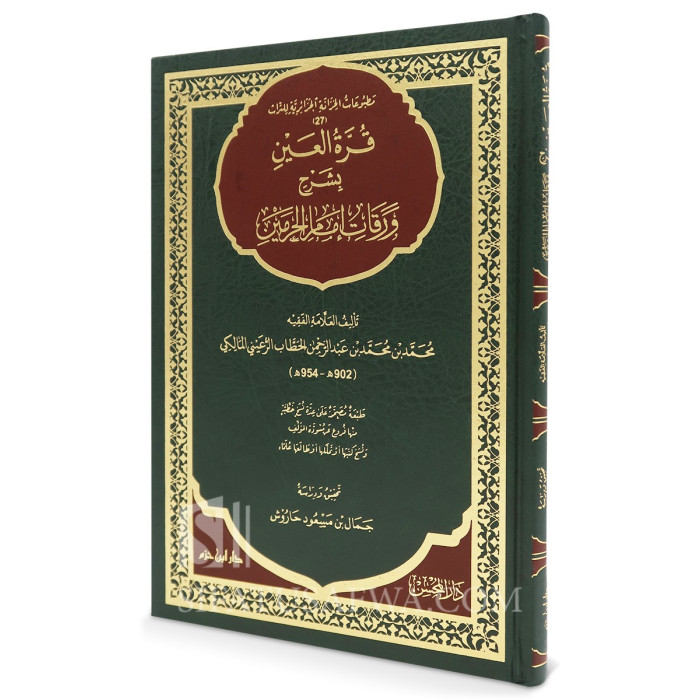
Qurrat al‑ʿAyn fī Sharḥ al‑Waraqāt
This module introduces students to the foundational principles of legal theory through Qurrat al‑ʿAyn, a celebrated commentary on Imām al‑Juwaynī’s al‑Waraqāt. The text provides a clear and structured entry point into the discipline of usūl al‑fiqh, covering essential topics such as the nature of rulings, categories of commands and prohibitions, consensus, analogy, and the architecture of legal reasoning.
The commentary is distinguished by its clarity and pedagogical precision. It unpacks the dense formulations of al‑Waraqāt into accessible explanations while preserving the depth and nuance of the classical tradition. Students will gain a firm grounding in the conceptual vocabulary of usūl, preparing them for more advanced works in the discipline.
Across the term, lessons will combine close reading, guided explanation, and practical application. The aim is to cultivate a disciplined understanding of how Islamic law is derived, interpreted, and reasoned within the classical framework.
Qurrat al‑ʿAyn is one of the most widely taught commentaries on Imām al‑Juwaynī’s al‑Waraqāt, a foundational primer in usūl al‑fiqh. The work clarifies the terse expressions of the original text and provides students with a structured pathway into the discipline. Its balanced style – concise yet sufficiently detailed – has made it a staple in traditional curricula across the Muslim world. This commentary serves as an ideal first step for students beginning their journey into the principles of Islamic legal reasoning.
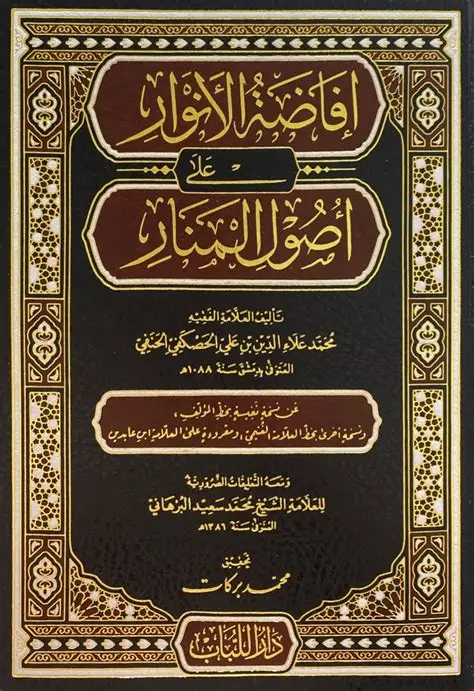
Ifādat al‑Anwār
This module explores the principles of legal theory through Ifādat al‑Anwār, al‑Ḥaṣkafī’s important commentary on Manār al‑Anwār, a central text in the Ḥanafī usūl tradition. The work represents a significant development in the methodological thought of the school, synthesising earlier formulations while offering precise definitions, structured argumentation, and a refined treatment of key debates.
Students will engage with topics such as the nature of evidence, the hierarchy of proofs, linguistic indicators, the role of juristic preference (istiḥsān), and the methodological distinctions that characterise the Ḥanafī approach. The commentary’s clarity and systematic organisation make it an ideal bridge between introductory primers and advanced works.
The course will guide students through selected passages, supported by English explanations and contextual notes. The goal is to deepen their understanding of how the Ḥanafī school conceptualises legal reasoning and how its methodological commitments shape substantive law.
Ifādat al‑Anwār is al‑Ḥaṣkafī’s authoritative commentary on Manār al‑Anwār, one of the most influential manuals of Ḥanafī legal theory. The text refines and expands upon the foundational discussions of the Manār, offering precise definitions, structured analysis, and engagement with the major debates of the school. Its clarity and depth have secured its place as a key intermediate text in the study of usūl al‑fiqh. For students seeking to understand the methodological underpinnings of the Ḥanafī tradition, Ifādat al‑Anwār provides an indispensable guide.
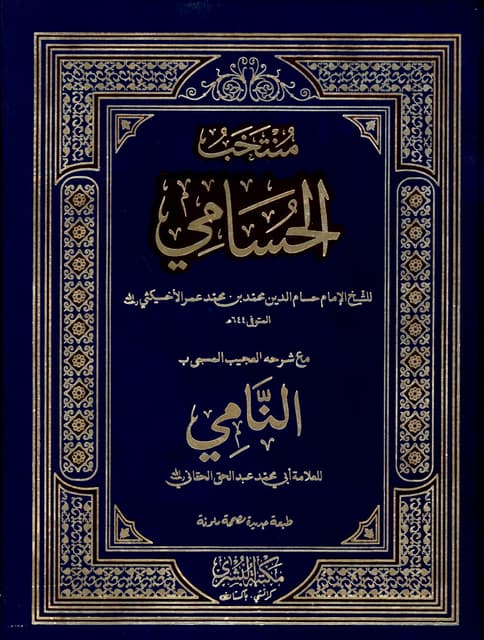
Ijmaʿ: Consensus and Authority in the Islamic Legal Tradition
This module explores the concept of ijmaʿ — one of the central pillars of Islamic legal theory — by tracing its origins, evolution, and the major scholarly debates that shaped its authority. Students will examine how consensus emerged as a binding proof in the formative period, the methodological foundations that justify its use, and the differing formulations offered by jurists across the legal schools.
The course investigates the positions of early proponents, the critiques raised by later scholars, and the practical implications of ijmaʿ in deriving and stabilising law. Through guided readings and structured discussion, students will gain a nuanced understanding of the categories of consensus, the evidentiary standards required to establish it, and the epistemological questions that surround its certainty and scope.
While the primary instructional text will be Muntakhab al‑Ḥusāmī, students will also engage with selections from Imām al‑Ghazālī’s al‑Mustasfā and other classical works. This comparative approach allows students to appreciate how ijmaʿ is conceptualised across different methodological traditions and how it functions within the broader architecture of Islamic legal reasoning.
Muntakhab al‑Ḥusāmī is a concise yet influential manual of Ḥanafī legal theory, valued for its clarity and precision. Its treatment of ijmaʿ distils the essential debates around consensus, outlining the conditions for its establishment, the evidentiary thresholds required, and the methodological distinctions that differentiate the Ḥanafī approach from other schools. The text serves as an ideal foundation for students beginning their study of ijmaʿ, offering a structured entry point into one of the most significant — and contested — sources of Islamic law.
Ijmaʿ: Consensus and Authority in the Islamic Legal Tradition
This module examines qiyās, the central mechanism of analogical reasoning in Islamic legal theory, and one of the most sophisticated tools through which jurists extend the law to new cases. Students will explore the conceptual foundations of qiyās, its epistemological status, and the methodological debates that shaped its acceptance and application across the legal schools.
The course begins with the origins of analogical reasoning in the formative period, then moves through the classical elaborations of the major usūl traditions. Students will study the structure of qiyās — the aṣl (root case), farʿ (new case), ḥukm (ruling), and ʿillah (effective cause) — and examine how jurists identify, test, and validate the ʿillah. Special attention is given to the distinctions between Ḥanafī and Shāfiʿī approaches, the role of istiḥsān and maṣlaḥa, and the critiques raised by theologians and literalists.
The primary instructional text will be Muntakhab al‑Ḥusāmī, whose treatment of qiyās is concise, structured, and pedagogically ideal for intermediate students. Alongside this, students will engage with selected passages from Imām al‑Ghazālī’s al‑Mustasfā and other classical works to appreciate how different traditions conceptualise the logic and limits of analogical reasoning.
By the end of the module, students will have a clear understanding of how qiyās functions within the architecture of Islamic law, how jurists reason analogically, and how methodological commitments shape legal outcomes.
The qiyās section of Muntakhab al‑Ḥusāmī offers one of the most accessible introductions to analogical reasoning in the Ḥanafī usūl tradition. The text outlines the essential components of qiyās, defines the criteria for a valid ʿillah, and explains the methodological distinctions that set the Ḥanafī approach apart from other schools. Its clarity, brevity, and structured presentation make it an ideal foundation for students beginning their study of analogical reasoning. Through this text, learners gain a disciplined understanding of how jurists extend rulings, identify effective causes, and navigate the complex terrain of legal inference.
Multaqā of al-Halabī ملتقى الأبحر
Family Law الاحوال الشخصية
Ownership and Contracts الملكية و العقود
This module on “Ownership and Contracts (الملكية و العقود)” within the Hanafi school of law aims to explore the intricate legal frameworks that govern the acquisition, utilisation, and transfer of ownership, as well as the formation and enforcement of contracts in various types of transactions. One of the most comprehensive and nuanced among Islamic jurisprudential schools, the Hanafi approach offers a rich array of legal principles and precedents in matters of ownership—ranging from the classification of assets to the rules surrounding joint ownership and leasing.
The objective of this module is to provide students with the requisite knowledge to understand the legal framework for these two important areas of law.
This module also includes a detailed study of riba based on the major legal schools, along with a study of gharar (غرر) in Islamic Law. We also cover a number of modern issues that include insurance contracts and mortgages.
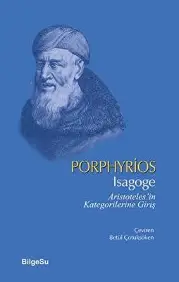
Logic:
Foundations of Reasoning in the Islamic and Western Traditions
This module introduces students to the essential terminology, structures, and conceptual tools of Aristotelian logic as it developed in both the Islamic East and the Latin West. Rather than treating logic as an abstract discipline, the course anchors each concept in its historical trajectory – from Aristotle’s Organon, through the great Muslim logicians such as al‑Fārābī, Ibn Sīnā, and al‑Taftāzānī, and into its later reception in medieval Europe.
Across six structured sessions, students will explore the core elements of traditional logic: terms and definitions, propositions, syllogisms, fallacies, and the architecture of demonstrative reasoning. Each session includes a clear lesson plan, guided explanation, and curated readings in English to ensure accessibility while maintaining intellectual rigour. The aim is to equip students with the analytical tools that underpin classical Islamic scholarship and to cultivate clarity of thought, precision in argument, and disciplined reasoning.
Isāghūjī – attributed to Athīr al‑Dīn al‑Abharī – is one of the most influential introductory manuals in the Islamic logical tradition. For centuries it has served as the standard entry point into manṭiq, distilling the essential principles of Aristotelian logic into a concise and structured primer. The text covers the foundational topics of terms, definitions, propositions, and syllogistic reasoning, providing students with the conceptual framework required for advanced study.
Its brevity is deceptive: Isāghūjī became the backbone of logic curricula across the Muslim world precisely because it balances clarity with depth. Commentaries and glosses on the text span the Ottoman, Persian, Central Asian, and Indo‑Muslim scholarly worlds, testifying to its enduring relevance. In this course, Isāghūjī is approached alongside modern English explanations to ensure students grasp both its technical vocabulary and its place within the broader intellectual heritage of Islamic scholarship.
Course Details
Time Commitment
Once a week
Lesson Duration
4hrs
Course Duration
4 Years
Format
Online
Course Start Date
Sunday 20th September 2026
Frequently Asked Questions
Torquent sollicitudin augue set molestias cupidatat ipusm vulputate cubilia pretium, quam.
Torquent sollicitudin augue set molestias cupidatat ipusm vulputate cubilia pretium, quam.
Torquent sollicitudin augue set molestias cupidatat ipusm vulputate cubilia pretium, quam.
Payment Plans
One-Off Payment
£899
- Live Classes
- Complete course materials
- Dedicated Support 7-days a week
- Class Recordings
- 6 Month Access to all Sacred Texts Weekly Supplementary Classes
- FREE 12 Months Access to the “Arabic Journey” Programme for Early Birds
Monthly 1
£52.40/mo
£375 up-front (non-refundable)
then 10 payments of £52.40
- Live Classes
- Complete course materials
- Dedicated Support 7-days a week
- Class Recordings
- 6 Month Access to all Sacred Texts Weekly Supplementary Classes
- FREE 12 Months Access to the “Arabic Journey” Programme for Early Birds
Monthly 2
£29.50/mo
£604 up-front (non-refundable)
then 10 payments of £29.50
- Live Classes
- Complete course materials
- Dedicated Support 7-days a week
- Class Recordings
- 6 Month Access to all Sacred Texts Weekly Supplementary Classes
- FREE 12 Months Access to the “Arabic Journey” Programme for Early Birds